
 English
 русский
 عربى
Silver Gray/Army Green Tarpaulin: The Cover That Works Both Ways
A silver gray/army green tarpaulin is a dual-color cover with a silver gray reflective face and an army green face that blends into the background. The silver side reflects the sun and the heat. The green side keeps the cover from standing out on a job site, a campsite, or a backyard. The two-color construction is not a style choice. It is a working decision for the load that has to stay cool and the site that does not want a bright orange billboard.
Silver Reflects, Green Blends
The silver gray face reflects solar radiation and keeps the space underneath cooler than a dark tarp. Dark tarps absorb the heat and turn the covered load into an oven. The silver gray/army green tarpaulin factory compounds the silver pigment with the UV stabilizers so the reflectiveness holds through the months of exposure.
The army green face serves the opposite purpose. It blends into the grass, the trees, and the earth tones of a work site. A bright orange tarp signals a work zone, which is not always wanted. The green side keeps the cover low profile.
The Weave and the Lamination
The tarp starts as the woven HDPE fabric. The tape is extruded, stretched, and woven into the grid. The weave density and the tape thickness set the tensile strength. The silver gray/army green tarpaulin factory specifies the weave to match the target weight grade.
Lamination bonds the silver film to one side and the green film to the other. Heat and pressure fuse the layers into a single sheet. The factory that controls the lamination temperature and the roller pressure produces a bond that does not delaminate when the tarp is folded, flapped, or dragged.
The Edges and the Grommets
The tarp fails at the edge first. The fabric frays and the grommets pull through. The silver gray/army green tarpaulin factory finishes the perimeter with a folded, heat-sealed hem that doubles the material thickness where the ropes and bungees attach.
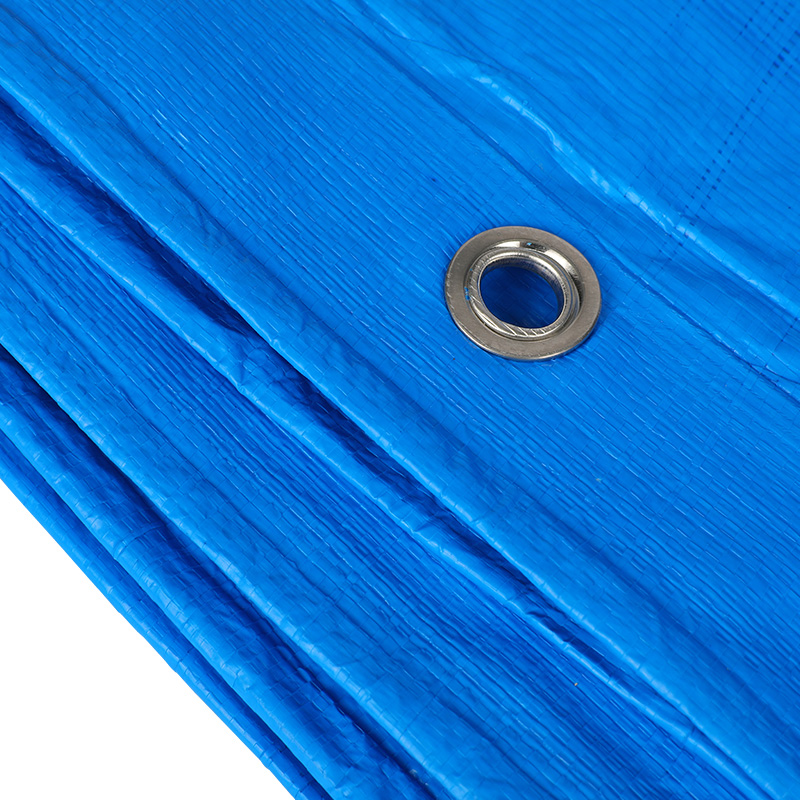
Brass or stainless grommets set into the reinforced hem hold the tie-down load. The factory places the grommets at the regular intervals and adds the corner patches where the stress concentrates.
What the factory has to deliver:
- UV-stabilized silver pigment that stays reflective
- Army green face that blends into the surroundings
- Woven HDPE fabric with the tensile strength matched to the grade
- Lamination bond that does not delaminate
- Reinforced hem with brass or stainless grommets
- Corner patches or rope reinforcement on the heavy grades
Where the Tarp Works
The truck driver covers the temperature-sensitive load with the silver side out. The construction crew uses the green side facing the street to keep the site low profile. The camper uses the silver side up for the shade and the green side out for the camp.
The Color That Fades and the Layer That Peels
The silver fades to gray and the reflectiveness drops. The cheap pigment without the stabilizer causes it. The layers delaminate at the edge because the lamination was weak. The grommets pull through because the hem was too thin.
A silver gray/army green tarpaulin covers from both sides. The silver reflects. The green blends. Choose a factory that stabilizes the silver and bonds the layers.
Your email address will not be published. Required fields are marked *

Info
+86-15967922255
No. 859, Huafeng Road, Jindong District, Jinhua City, Zhejiang Province, China
Copyright © Jinhua Donglin Tarpaulin Daily Products Co., Ltd.

Double White & Black & Light Blue Tarpaulin