
 English
 русский
 عربى
Light Blue/White Tarpaulin: The Cover That Keeps the Heat Off and the Light On
A light blue/white tarpaulin is a dual-color cover with a light blue outer face and a white inner face. The blue side reflects the sun and keeps the covered space cooler than a dark tarp. The white side faces the cargo and reflects the ambient light back into the covered area. It is not a fashion choice. It is a working decision for the truck load, the market stall, the scaffolding wrap, and the temporary shelter.
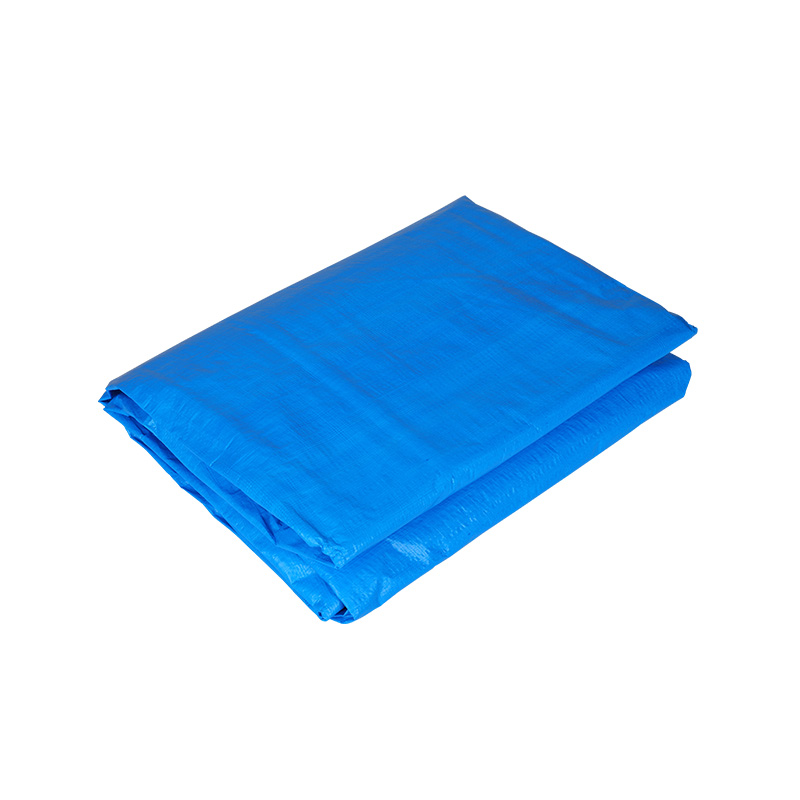
The Light Blue Outer Face
The dark tarps absorb the solar radiation and heat the space underneath. The light blue reflects more of the sunlight and stays cooler. A light blue/white tarpaulin factory compounds the blue pigment with the UV stabilizers so the color holds its reflectiveness through the months of the exposure. The dark blue fades to the pale gray. The light blue holds the shade longer.
The White Inner Face
The white side faces down. It reflects the ambient light back into the covered space, so the workers can see under the tarp and the cargo stays visible. A light blue/white tarpaulin factory produces the white layer with the opacity to block the direct light while bouncing the ambient light back.
The Weave and the Lamination
The tarp is the woven HDPE fabric with the colored coating on each side. The weave density and the tape thickness set the tensile strength. The lamination bonds the blue and the white coatings to the fabric. A light blue/white tarpaulin factory that controls the lamination temperature and the roller pressure produces the bond that does not delaminate when the tarp is folded or dragged.
The Edges and the Grommets
The tarp fails at the edge first. The fabric frays and the grommets pull through. The light blue/white tarpaulin factory finishes the perimeter with the folded heat-sealed hem that doubles the material thickness. The brass or the stainless grommets set into the hem hold the tie-down load. The corner patches reinforce the stress points.
Here is what a light blue/white tarpaulin has to deliver:
- Light blue outer layer with the UV-stabilized pigment
- White inner layer with the opacity for the light reflection
- Woven HDPE fabric with the strength matched to the grade
- Lamination bond that does not delaminate
- Reinforced hem with the brass or stainless grommets
- Corner patches or the rope reinforcement on the heavy grades
Where the Tarp Works
The truck driver covers the temperature-sensitive load with the light blue side out. The market vendor uses the white interior to brighten the stall. The construction crew wraps the scaffolding with the light blue facing the sun and the white facing the work area.
The Color That Fades and the Layer That Peels
The colors fade because the pigments were not stabilized. The light blue turns pale and the white turns yellow. The layers delaminate at the edge because the lamination was weak. The grommets pull through because the hem was too thin.
A light blue/white tarpaulin covers and protects from both sides. The blue keeps the heat down. The white keeps the light up. Choose a factory that stabilizes the colors and bonds the layers.
Your email address will not be published. Required fields are marked *

Info
+86-15967922255
No. 859, Huafeng Road, Jindong District, Jinhua City, Zhejiang Province, China
Copyright © Jinhua Donglin Tarpaulin Daily Products Co., Ltd.

Double White & Black & Light Blue Tarpaulin