
 English
  русский
 عربى
عربىHeavy-Duty PE Woven Tarpaulin: Durable Cover Choice Expands Work Sites
The heavy-duty PE woven tarpaulin has become a standard protective solution for construction projects, agricultural storage, and industrial laydown areas where mechanical strength and weather resistance are primary concerns. This fabric combines high-tenacity polyethylene tapes woven into a stable scrim structure, then laminated or coated on one or both sides to achieve water repellency and UV protection. Recent field usage data indicate that properly specified woven tarpaulins can withstand wind loads exceeding 80 kilometers per hour and repeated folding cycles without significant loss of tensile integrity, making them a reliable alternative to non-woven films in demanding outdoor conditions.
Weave Construction and Base Fabric Specs
The performance of a heavy-duty PE woven tarpaulin begins with its weaving pattern and yarn denier selection. Most industrial grades utilize a flat-tape weaving process that produces a tight, square-grid structure with small open gaps between adjacent yarns. Critical specifications include:
Warp and weft thread counts, typically ranging from 8x8 to 12x12 threads per square centimeter, affecting both tear strength and dimensional stability;
- Tape width and thickness, which determine the fabric's weight per square meter—commonly between 150 and 300 grams for heavy-duty classifications;
- Weave type (plain, twill, or leno) that influences drapeability and resistance to edge unraveling;
- Selvedge treatment, including heat-cut or taped borders that prevent fraying during cutting and hemming operations.
Additional variables such as elongation at break, grab tensile strength, and trapezoidal tear resistance are routinely measured during production to ensure consistency across batch runs.
Coating and Lamination Options
While base woven fabric provides the fundamental tensile skeleton, the heavy-duty PE woven tarpaulin relies on coating or lamination for its barrier properties. Manufacturers offer several treatment pathways that buyers evaluate based on intended use:
- Polyethylene film lamination, applied to one or both faces, delivers full water impermeability and a smooth printing surface;
- Acrylic emulsion coating, which adds breathability and moderate water repellency without making the fabric overly stiff;
- Polyurethane topcoats, chosen for enhanced abrasion resistance in drag-and-drop applications such as truck curtain sides;
- Flame-retardant additive incorporation, meeting regulatory standards for temporary structures in public spaces.
Each option imposes trade-offs: laminated sheets are heavier and less flexible but offer predominant hydrostatic head ratings, while coated versions remain lighter and fold more compactly at the cost of slightly lower puncture thresholds.
UV Stabilization and Color Retention
Outdoor exposure imposes severe aging stresses on heavy-duty PE woven tarpaulin, with ultraviolet radiation acting as the primary degradation driver. To counter this, producers incorporate carbon black or organic UV absorbers into the resin during extrusion, alongside hindered amine light stabilizers that scavenge free radicals generated by sunlight. Field observations have established several useful guidelines: dark shades such as forest green, navy blue, or black generally retain tensile strength longer than light colors due to higher pigment loading; orange and yellow formulations fade faster but remain acceptable for short-term signage or safety markings; and two-sided coating helps preserve both faces, as the underside often suffers from reflected UV from ground surfaces. Regular inspection schedules now recommend checking for surface chalking or loss of gloss as early warning signs, preceding measurable loss of mechanical properties by several months.
Reinforcement and Edge Finishing
Edge treatments significantly influence the service life of a heavy-duty PE woven tarpaulin, since hems and grommets are common failure points under cyclic loading. Standard reinforcement methods include:
- Folded-and-stitched hems, using heavy polyester or UV-stabilized nylon thread in double- or triple-stitch patterns;
- Heat-welded borders, where the coating material is melted and fused over the raw edge to seal yarn ends and prevent wicking;
- Rope-in-hem constructions, incorporating a braided polypropylene cord inside the folded edge for added tear resistance at tie-down points;
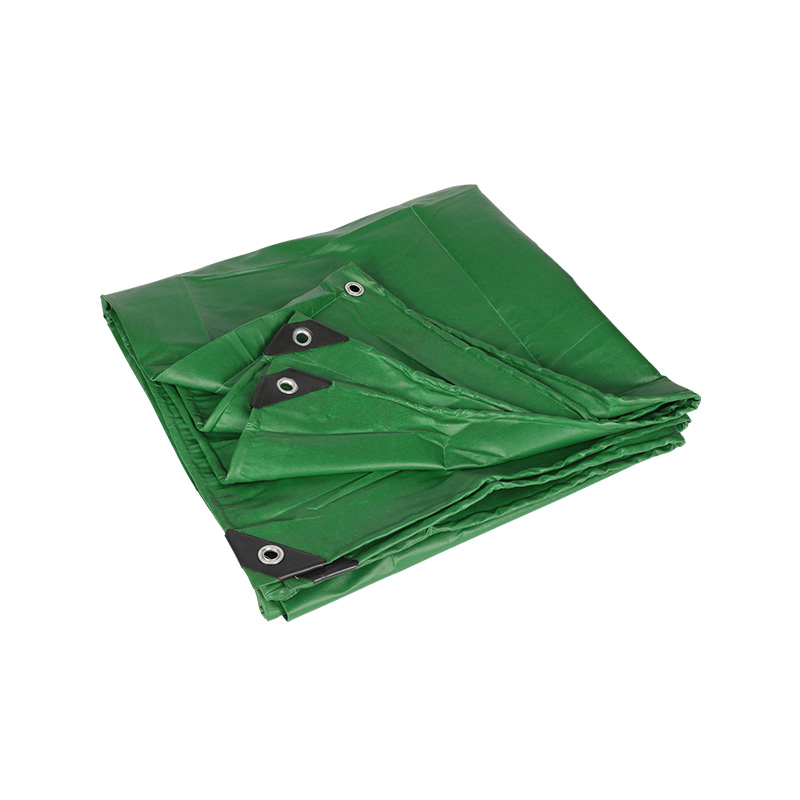
- Corner patches—extra layers of woven fabric adhered or stitched over the corners, where stress concentration is high during tensioning.
Grommet placement also follows spacing rules: closer intervals around corners and wider spacing along straight runs, with brass or coated steel eyelets selected to match the expected tension loads.
Load Ratings and Wind Resistance Calculations
Engineering users of heavy-duty PE woven tarpaulin often request documented load ratings to match covers with site-specific wind conditions. Standard references provide guidance: a 200-gram-per-square-meter fabric with proper hem reinforcement can sustain safe working tensions of approximately 40 to 60 kilograms per linear meter, translating to wind resistance up to Force 9 on the Beaufort scale when properly anchored. Safety margins are calculated using the fabric's ultimate tensile strength divided by a factor of four to six, depending on application criticality and anticipated fatigue cycles. Many project specifications now require wind load calculations that factor in tarp surface area, attachment spacing, and anchor type, with engineering tables available from material suppliers to simplify the selection process.
Inspection, Repair, and Storage Practices
Field maintenance of heavy-duty PE woven tarpaulins follows a structured routine that extends usable life between replacements. Recommended steps include: visual scanning for pinholes or abrasion patches after each deployment; repairing small cuts with adhesive-backed PE tape or heat-seal patches designed for woven substrates; replacing grommets that show elongation or corrosion before they tear through the hem; and cleaning off accumulated dirt with mild detergent and soft-bristle brushes, avoiding high-pressure washers that can force water into uncoated yarn gaps. For seasonal storage, tarpaulins should be dried completely, folded loosely to avoid sharp creases, and stored off the ground in ventilated shelters where rodents cannot reach the edges.
Transportation and Logistics Applications
The heavy-duty PE woven tarpaulin has become indispensable in flatbed trucking, railcar covering, and container stuffing operations. Logistics operators appreciate its combination of moderate weight and high tear resistance, which allows single workers to handle covers up to 6 by 8 meters without mechanical assistance. The material also accepts printed identifiers—company logos, handling warnings, or load weight labels—via screen printing or digital transfer, staying legible for multiple shipping cycles before fading. In intermodal transfers, woven tarpaulins offer the added benefit of breathability when specified with micro-porous coatings, reducing condensation damage to hygroscopic cargo such as paper rolls or bagged grains during temperature swings.
Cost-Effectiveness and Lifecycle Comparisons
Buyers comparing heavy-duty PE woven tarpaulin against alternatives such as canvas, PVC sheeting, or non-woven polypropylene often find the woven PE option delivers the low total cost over a three-year usage horizon. Canvas offers predominant breathability but absorbs water and becomes heavier when wet; PVC sheeting provides unmatched chemical resistance but costs two to three times more and requires specialized repair methods; non-woven polypropylene has lower initial price but tears more easily and degrades faster under UV exposure. The woven PE product sits in a practical middle zone: affordable enough for large-area coverage, durable enough for multiple reuses, and repairable with simple field kits that keep downtime to a small.
Factory Quality Assurance Systems
Modern production lines for heavy-duty PE woven tarpaulin employ continuous monitoring systems that track weave density, coating weight, and width tolerance in real time. Every production roll receives a unique identifier linking to in-house test records covering tensile strength, tear propagation, coating adhesion, and hydrostatic resistance. Random samples from each shift undergo accelerated aging tests in ultraviolet chambers, with color change and residual strength recorded against reference standards. These quality assurance measures have reduced field complaint rates, giving end users greater confidence in specifying woven PE covers for critical infrastructure protection and long-term outdoor storage applications.
Your email address will not be published. Required fields are marked *

Info
+86-15967922255
No. 859, Huafeng Road, Jindong District, Jinhua City, Zhejiang Province, China
Copyright © Jinhua Donglin Tarpaulin Daily Products Co., Ltd.

Double White & Black & Light Blue Tarpaulin