
 English
  русский
 عربى
عربىSilicone-Coated Outdoor PE Tarpaulin: New Fabric Protection Layer Gains Market Favor
The silicone-coated outdoor PE tarpaulin has recently drawn increased attention from industrial buyers and field operators seeking a balance between lightweight handling and long-term weather resistance. Unlike traditional PVC or wax-coated fabrics, this emerging product variant applies a thin, cured silicone layer over high-density polyethylene substrate, delivering surface properties that repel water, resist dust adhesion, and maintain flexibility across a wide temperature spectrum. Recent comparative trials indicate that silicone-coated versions can outlast uncoated PE sheets by nearly double in continuous outdoor exposure, while also simplifying cleaning and storage routines for end users.
Coating Process and Curing Techniques
The silicone application process for outdoor PE tarpaulins differs substantially from conventional lamination or dip-coating methods. Most factories now employ a roller-transfer system that deposits a liquid silicone emulsion uniformly across the fabric surface, followed by a thermal curing stage at controlled temperatures. Key parameters include:
- Coating weight per square meter, typically set between 30 and 60 grams to achieve full coverage without stiffening the base cloth;
- Curing oven temperature profiles, ramping gradually to avoid scorching the PE substrate while ensuring complete cross-linking of the silicone polymer;
- Line speed adjustments that balance production throughput against dwell time for adequate adhesion;
- Post-cure cooling and winding tension, which affect final roll flatness and wrinkle resistance.
Additional process controls cover silicone viscosity monitoring, ambient humidity management, and roller cleanliness schedules, as any contamination can produce pinholes or uneven gloss levels across the finished sheet.
Performance Characteristics in Outdoor Settings
Users of silicone-coated outdoor PE tarpaulins report several functional advantages over uncoated or acrylic-coated alternatives. The silicone layer provides a slick, non-stick surface that sheds rain droplets quickly and prevents mud or bird droppings from bonding firmly, making field cleaning as simple as a water rinse or light wipe. Furthermore, the coating retains its pliability in sub-zero conditions, reducing the risk of cracking during winter deployments, while simultaneously resisting softening or tackiness under high summer heat. The material also demonstrates lower friction against support frames and tie-down ropes, which less abrasion wear at contact points and extends the service life of both the tarp and its securing hardware.
Durability Factors and UV Management
Longevity of the silicone-coated outdoor PE tarpaulin depends on multiple interacting variables: base fabric denier and weave density, silicone layer thickness uniformity, ultraviolet stabilizer loading in both the PE and the silicone formulation, and the frequency of folding and unfolding cycles. Manufacturers have addressed these factors by introducing:
- Hindered amine light stabilizers into the silicone matrix to slow surface degradation from solar radiation;
- Cross-linked siloxane backbones that maintain elastic recovery after repeated stretching under wind loads;
- Double-sided coating options for applications requiring identical performance on both faces;
- Reinforced hem zones where extra silicone is applied to seal needle holes from stitching or welding operations.
These measures have pushed typical replacement intervals from 18 months for standard PE up to 36 months for silicone-coated equivalents in moderate continental climates.
Handling, Folding, and Field Repair
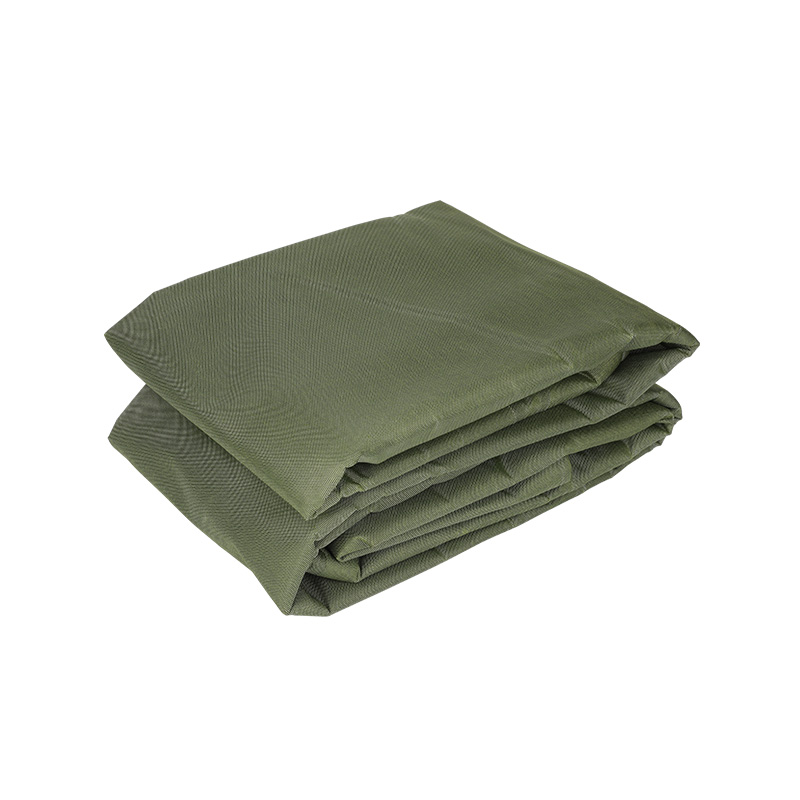
Field crews have developed practical routines specific to silicone-coated outdoor PE tarpaulins that differ from those used for heavier PVC tarps. Recommended practices include: folding the tarp along its natural crease lines rather than compressing it into arbitrary bundles, as sharp unrelated folds can stress the silicone interface; brushing off loose debris before rolling to prevent abrasive particles from embedding in the coating; and storing the folded tarp in breathable mesh bags rather than sealed plastic, which allows residual moisture to escape and prevents mildew growth on the underside. For minor surface scratches or localized coating loss, repair kits containing room-temperature-vulcanizing silicone compound are available, allowing operators to brush-apply a patch layer that restores water repellency without requiring factory-level heating equipment.
Comparative Advantages Over Alternative Coatings
When stacked against PVC-laminated or acrylic-coated PE fabrics, the silicone-coated outdoor PE tarpaulin shows distinct trade-offs that buyers now evaluate more systematically. Silicone offers predominant low-temperature flexibility, lower weight per square meter, and easier roll-up handling, whereas PVC provides higher puncture resistance and greater resistance to hydrocarbon solvents. Acrylic coatings, by contrast, fall between the two in cost but tend to yellow and become brittle faster than silicone under prolonged UV exposure. Many procurement teams now select silicone-coated versions for applications that prioritize frequent handling, compact storage, and temperature versatility, while reserving heavier coatings for high-abrasion or chemical-exposure scenarios.
Manufacturing Quality Indicators
For purchasers assessing silicone-coated outdoor PE tarpaulin shipments, several physical indicators reliably reflect production quality. Uniform gloss across the entire sheet suggests consistent coating thickness; a mild rubbery feel with no sticky residue indicates proper curing; and a sharp, clean edge profile with no fraying or delamination points to precise cutting and heat-sealing processes. Reputable factories also supply test certificates covering coated weight, tensile strength in both directions, tear propagation resistance, and water column pressure ratings. These documents, combined with a simple field test—folding a corner tightly and checking for white cracking lines—provide a quick yet meaningful verification of coating adhesion and elasticity before accepting large lot deliveries.
Emerging Application Sectors
Beyond traditional camping and construction covers, silicone-coated outdoor PE tarpaulin is finding new roles in temporary vehicle enclosures, haystack shielding in high-humidity regions, and protective drapes for painting or sandblasting operations where non-stick surfaces reduce cleanup time. The material is also being adopted by emergency response teams for rapid shelter deployment, as its lightweight roll format allows two personnel to handle covers exceeding 100 square meters without mechanical lifting aids. These expanding use cases are driving factory investments in wider extrusion lines and faster curing ovens, with the aim of bringing per-unit costs closer to conventional PE while maintaining the silicone layer's performance premium.
Your email address will not be published. Required fields are marked *

Info
+86-15967922255
No. 859, Huafeng Road, Jindong District, Jinhua City, Zhejiang Province, China
Copyright © Jinhua Donglin Tarpaulin Daily Products Co., Ltd.

Double White & Black & Light Blue Tarpaulin