
 English
  русский
 عربى
عربىAre Weather-Resilient Materials Becoming Essential in a Changing Climate?
Extreme weather discussions are trending across overseas social platforms, from construction forums on LinkedIn to outdoor communities on Reddit and YouTube. More buyers are asking the same question: how can materials stay reliable when rain, humidity, and sudden climate shifts are becoming more frequent? In this context, Rainproof Fabric is often mentioned in conversations about outdoor protection, while Double White Tarpaulin is increasingly viewed as a practical solution for multi-scenario coverage and daily industrial use.
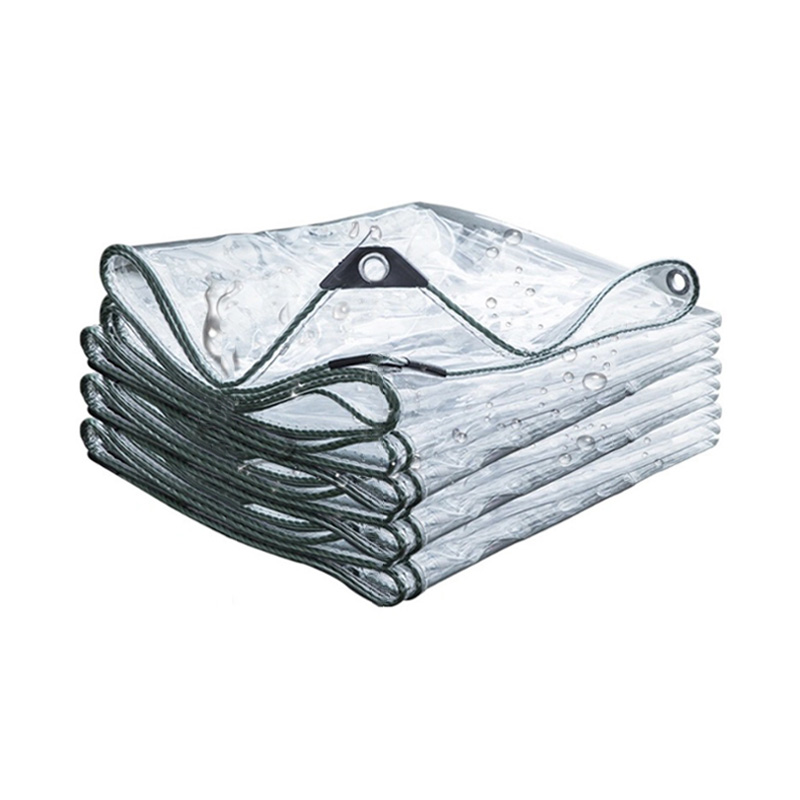
Climate Uncertainty Is Reshaping Material Choices
One clear global trend is uncertainty. Contractors, logistics companies, farmers, and outdoor equipment suppliers frequently share concerns about unpredictable rainfall and prolonged damp conditions. What used to be “seasonal preparation” has turned into a year-round requirement.
This shift has changed how buyers evaluate protective materials. Instead of focusing only on appearance or price, they look for fabrics that can perform steadily in repeated exposure to moisture, wind, and temporary outdoor storage. Materials are no longer passive coverings—they are active safeguards for assets, schedules, and peace of mind.
Old Covering Habits vs. New Usage Expectations
Many users openly discuss frustrations with traditional coverings that absorb moisture, become heavy, or lose shape after repeated use. These older solutions often require frequent replacement or constant adjustments, adding hidden labor and time costs.
In contrast, newer material expectations emphasize ease of handling and consistent performance. Users value coverings that are simple to deploy, fold, and store, without forcing changes to existing workflows. This is where modern protective solutions are quietly redefining daily efficiency, especially in construction sites, transport yards, and temporary shelters.
Why Practical Versatility Matters More Than Ever
Across overseas buyer discussions, versatility is a recurring theme. A single material that can serve multiple purposes—temporary roofing, cargo protection, equipment covering, or site partitioning—is seen as more practical than specialized options that work only in limited scenarios.
This mindset aligns with how Double White Tarpaulin is being discussed online: not as a niche product, but as a flexible, dependable layer that fits into many environments. Its neutral appearance also supports use in both industrial and commercial settings, making it easier for buyers to standardize materials across projects.
User Experience Is the New Quality Benchmark
Rather than technical jargon, social media conversations focus on experience: “Does it stay manageable after rain?” “Can one person handle it?” “Will it still work after repeated folding?” These questions reveal a deeper shift in buying logic.
Users want materials that feel predictable. A covering that behaves the same way every time—no surprises, no extra cleanup—creates trust. This is why Rainproof Fabric is often discussed in terms of daily convenience rather than abstract performance claims. Reliability, from a user’s perspective, is about reducing friction, not adding complexity.
Manufacturing Perspective: Consistency Builds Confidence
From a manufacturer’s standpoint, global buyers increasingly value production stability and material consistency. Industry news and B2B platforms highlight how controlled manufacturing processes contribute to uniform thickness, surface finish, and handling feel.
This attention to manufacturing discipline reflects a broader market expectation: buyers want long-term partners, not just products. Materials that integrate smoothly into existing usage habits, without requiring retraining or process changes, are more likely to earn repeat orders and positive word-of-mouth across international markets.
Practical Protection as a Standard, Not an Upgrade
As weather unpredictability becomes the norm rather than the exception, protective materials are moving from optional accessories to essential infrastructure. Buyers are no longer searching for “extra protection,” but for dependable solutions that quietly support their operations day after day.
In this evolving landscape, solutions centered around Rainproof Fabric and Double White Tarpaulin are increasingly recognized for their ability to balance protection, usability, and adaptability—qualities that align closely with what global users care about lost of right now.
Your email address will not be published. Required fields are marked *

Info
+86-15967922255
No. 859, Huafeng Road, Jindong District, Jinhua City, Zhejiang Province, China
Copyright © Jinhua Donglin Tarpaulin Daily Products Co., Ltd.

Double White & Black & Light Blue Tarpaulin